What is the measurement method for TOC? Combustion oxidation and wet oxidation [Basic Knowledge]
Burn organic matter or oxidize it with chemicals? The mechanisms and suitability of the oxidation methods and detection methods of TOC analyzers that convert it to carbon dioxide for measurement.
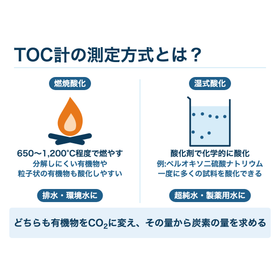
The TOC analyzer is a device that oxidizes organic matter in water to convert it into carbon dioxide, allowing for the determination of the amount of carbon contained in the organic matter. It is used for managing a wide range of organic pollution in water, from ultra-pure water to wastewater. According to the national notification that establishes the inspection methods for drinking water, total organic carbon analyzers are defined as a combination of sample introduction, decomposition, carbon dioxide separation, and detection components. The differences in methods mainly lie in the combinations of "how to oxidize" and "how to measure carbon dioxide." ■ How does the combustion oxidation method oxidize? Samples are injected into a combustion tube (such as one containing a catalyst) heated to a high temperature of approximately 650 to 1,200°C, where the organic matter is burned to produce carbon dioxide. The high combustion temperature allows for the oxidation of organic matter that is difficult to decompose and particulate organic matter that does not dissolve in water. This is why it is widely used in environmental water and industrial wastewater, which are prone to contain suspended solids. The combustion temperature varies by model, and some devices heat combustion tubes filled with platinum catalysts in furnaces up to 900°C. Be sure to check the specifications for the conditions specific to each model. Please feel free to consult us first.
- Company:トリイ
- Price:Other